The collapse of rental housing on Chicago’s North Side

I’ve written several times about the problem of shrinking population, and shrinking housing supply, in Chicago neighborhoods that ought to be booming. A quick recap: Over the last generation or so, the number of people wanting to live in Chicago’s close-in neighborhoods, particularly on the North and Northwest sides, has skyrocketed. Many of these people are also much wealthier than the people who had been living in these neighborhoods before. Downtown, builders have responded to this situation as they had historically throughout the city: by building more densely and allowing more people to live in a given area.
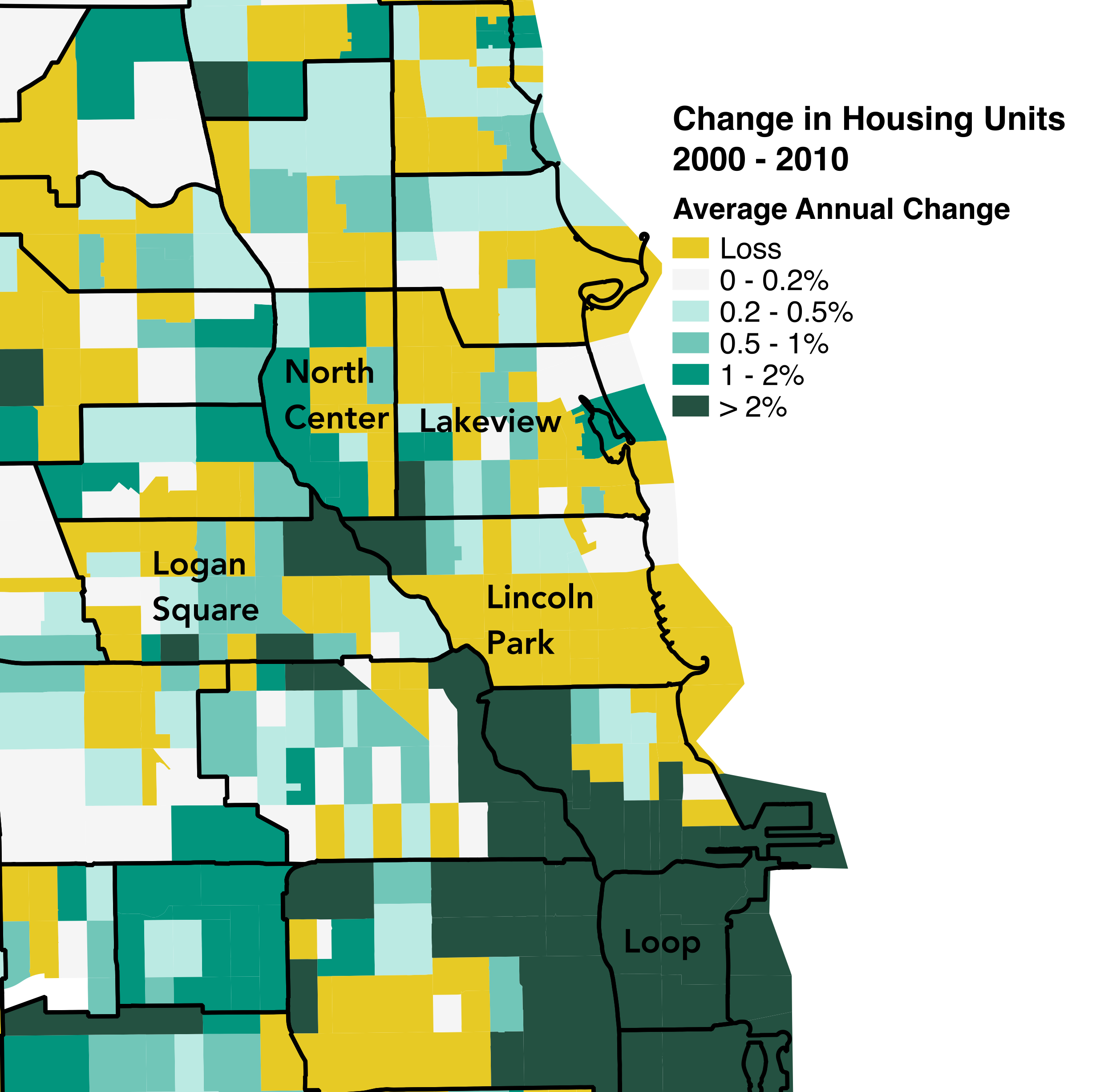
Note that outside of the central area, high rates of housing construction exist mainly along the river - along the western border of Lincoln Park and North Center. Many of those areas were formerly non-residential. Small amounts of new construction translated to high percentage growth.
Note that outside of the central area, high rates of housing construction exist mainly along the river – along the western border of Lincoln Park and North Center. Many of those areas were formerly non-residential. Small amounts of new construction translated to high percentage growth.

But because Chicago’s zoning code fits so snugly over its neighborhoods outside of downtown – so snugly, in fact, that maximum allowed densities are frequently much lower than what already exists – builders have not been able to add much new housing. Instead, they maximize their profits by turning two-flats into luxury two-flats, or into mini-mansions for a single family. As a result, as places like Lincoln Park get more desirable than they’ve ever been, fewer people are able to live there, and its population remains about 40% below its peak, depriving the rest of the city of whole heaps of tax money that we might be able to spend on schools, roads, transit, and so on. And, meanwhile, the intensified bidding war over the housing that remains drives up prices, pushing some of the people who would have lived in Lincoln Park in 1990 to Wicker Park in 2000 or Logan Square in 2010 – in other words, it causes gentrification.

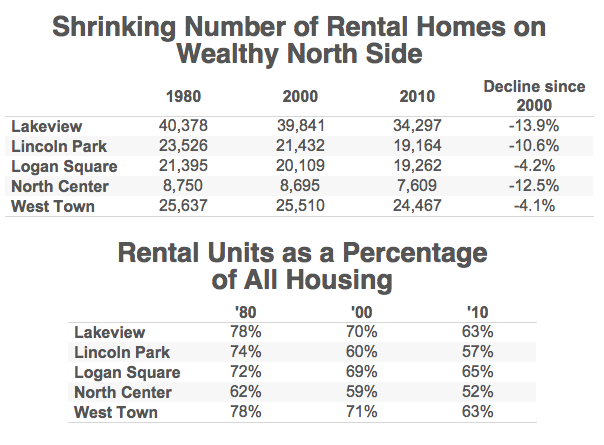
But the situation is actually even worse than that. Because the deconversion of multi-unit buildings into smaller multi-unit or single-unit buildings is just part of the removal of rental housing: there are also lots of buildings that retain the same number of units, but are converted from renter-occupied to owner-occupied. (This trend has slowed dramatically since the recovery of the rental market, and there are even a few places where condo buildings have been converted back to rental—but not nearly enough to reverse the trend of the last 20 years.)

As a result, the stock of rental homes in some of these North Side neighborhoods—which, at this point, is the market that anyone without an upper-middle-class income is in by default—has just completely collapsed.
Screen Shot 2015-08-28 at 6.25.30 PM

Why is this a problem? Well, for one, owner-occupied housing almost always excludes more people—people of more tenuous economic standing—than rental housing. This is true even when monthly payments aren’t terribly different, because owner-occupied housing requires greater savings, a more stable source of income, and generally better credit. Less rental housing in that sense translates directly into a more exclusionary neighborhood.

But also, to the extent that rental housing constitutes its own market, reducing the supply of homes through condo conversions will bid up rental prices in the same way that too-low supply of homes in general will. In the wake of the recession, huge numbers of people who might in another time have chosen to buy—even people with relatively high incomes—stayed in the rental market instead. They found it much smaller than it would have been a decade or two or three before, and that almost certainly contributed to the competition for apartments that has pushed prices so high over the last several years.

And, of course, this is all happening in the context of sometimes extreme political pressure on aldermen and developers to privilege new owner-occupied housing over rentals. That makes pushing back against those pressures, as aldermen like Walter Burnett and Ameya Pawar have done, all the more crucial.

Brazil is a state of mind

But also, you know, a country. I don’t think I’ve ever done a photo post before, so please tolerate this one.

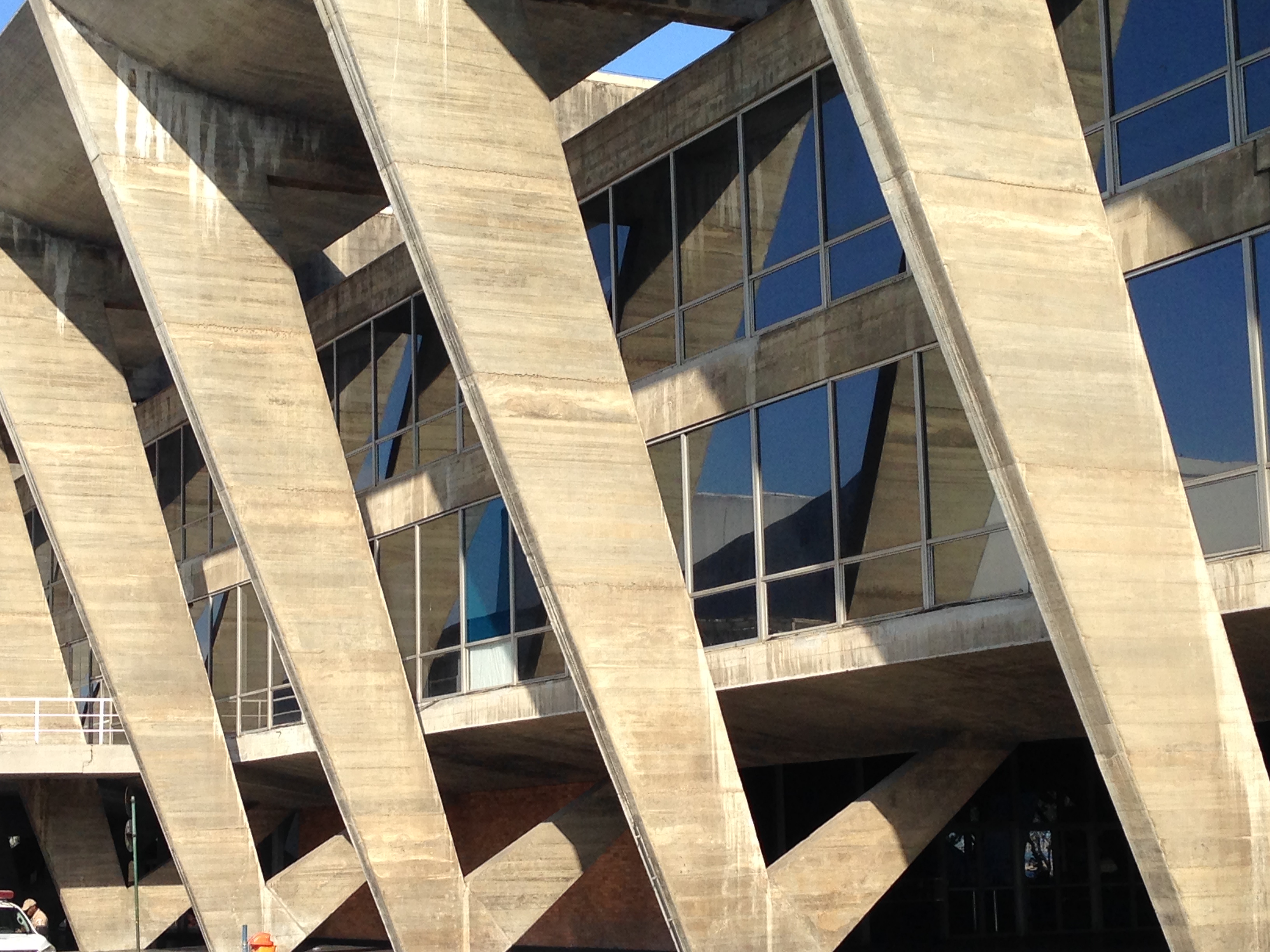
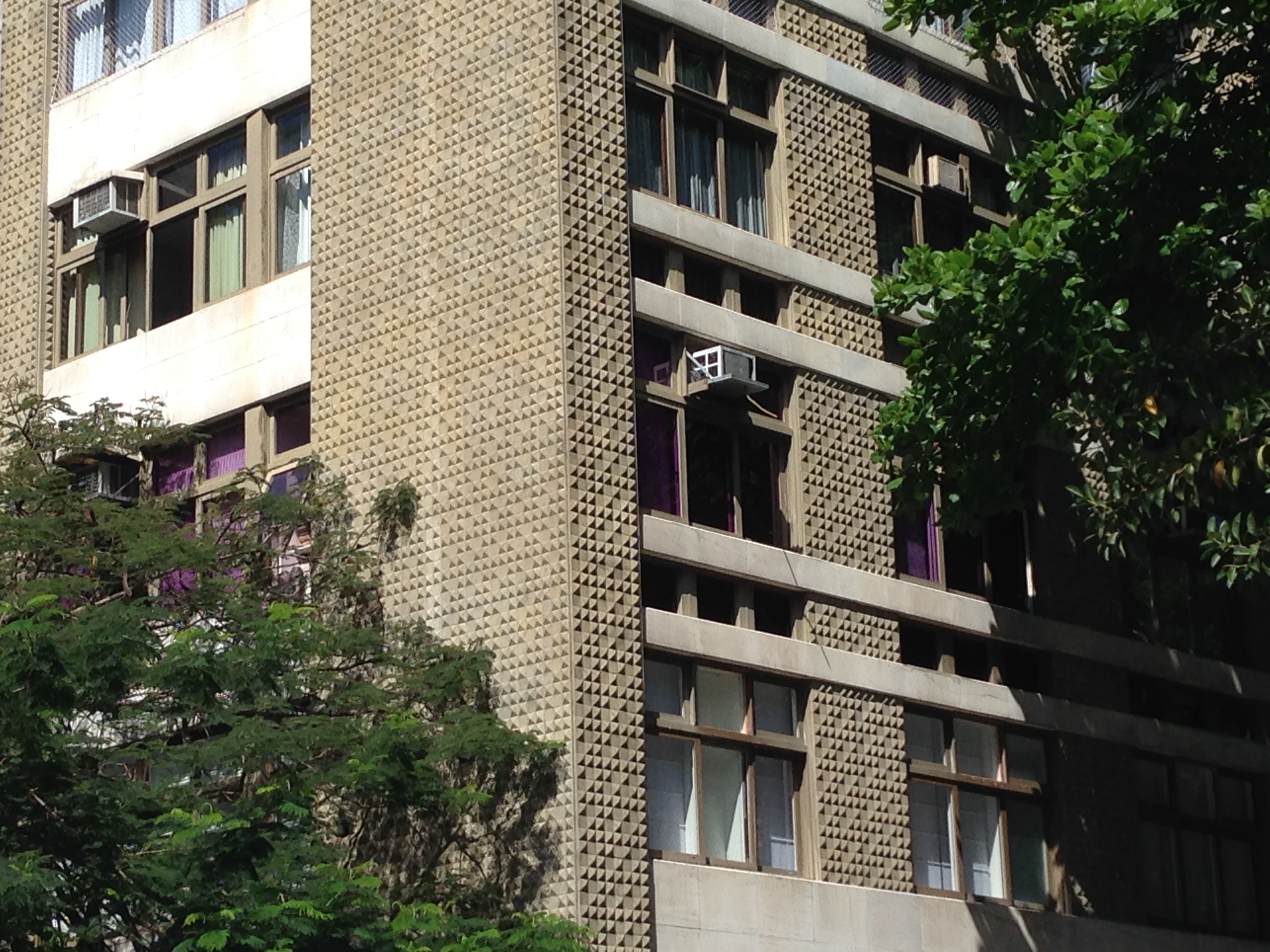
An art school in Rio de Janeiro.
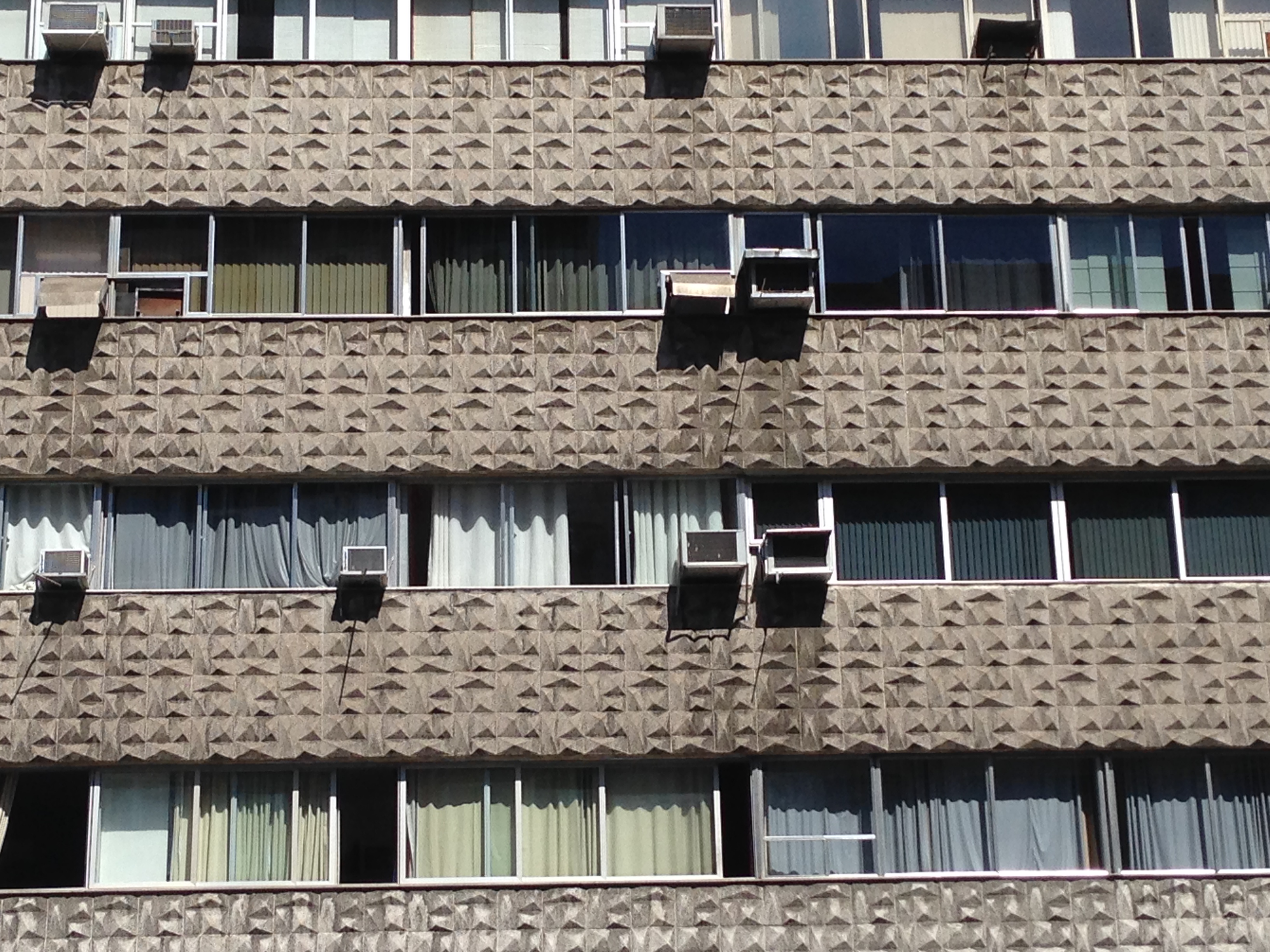
Texture
Texture.
Different building, same texture
Different building, similar texture.
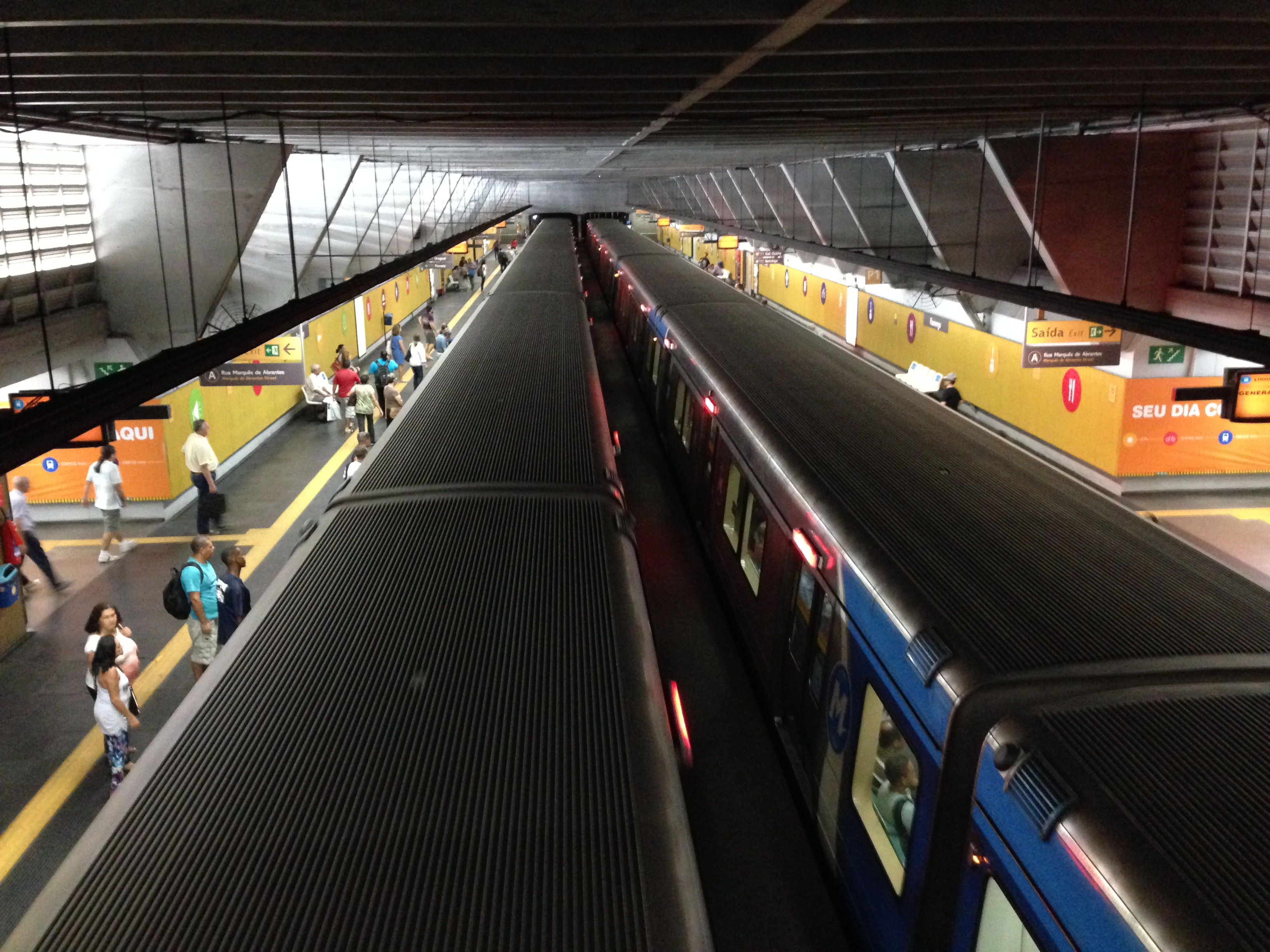
Trains, Rio
Trains, Rio.
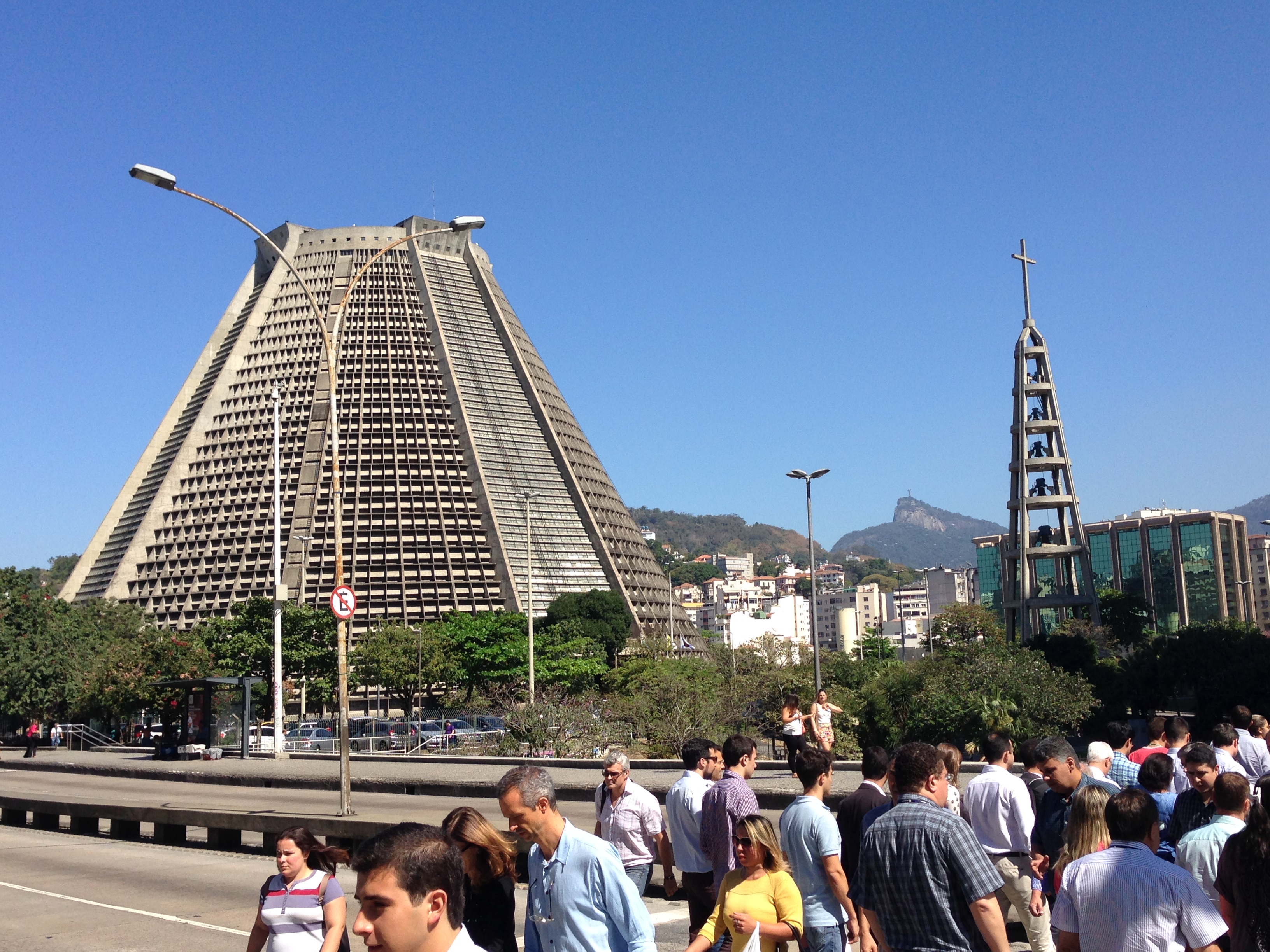
Metropolitan Cathedral, outside
Metropolitan Cathedral, outside.
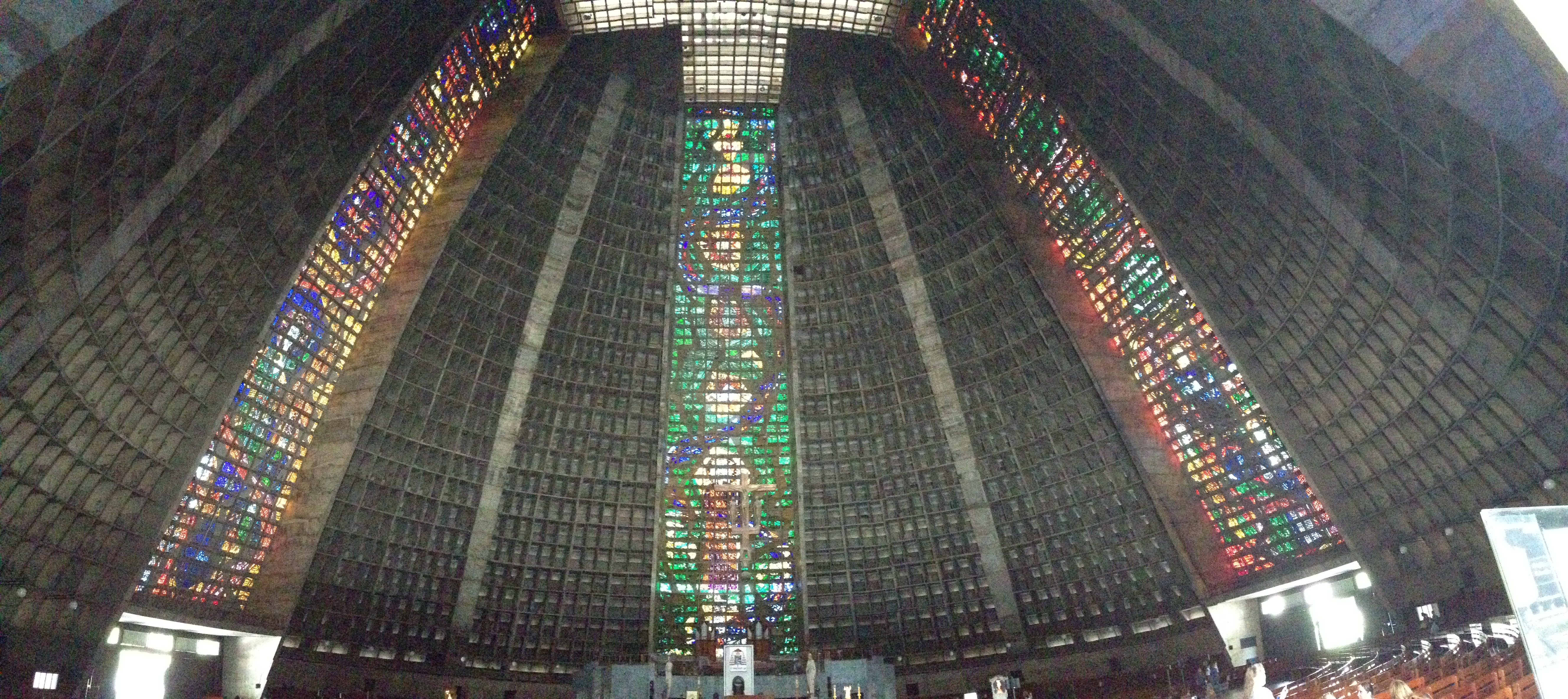
Metropolitan Cathedral, inside
Metropolitan Cathedral, inside.
Museum of Contemporary Art, Rio
Museum of Modern Art, Rio.
Train tracker, Rio
Train tracker, Rio.
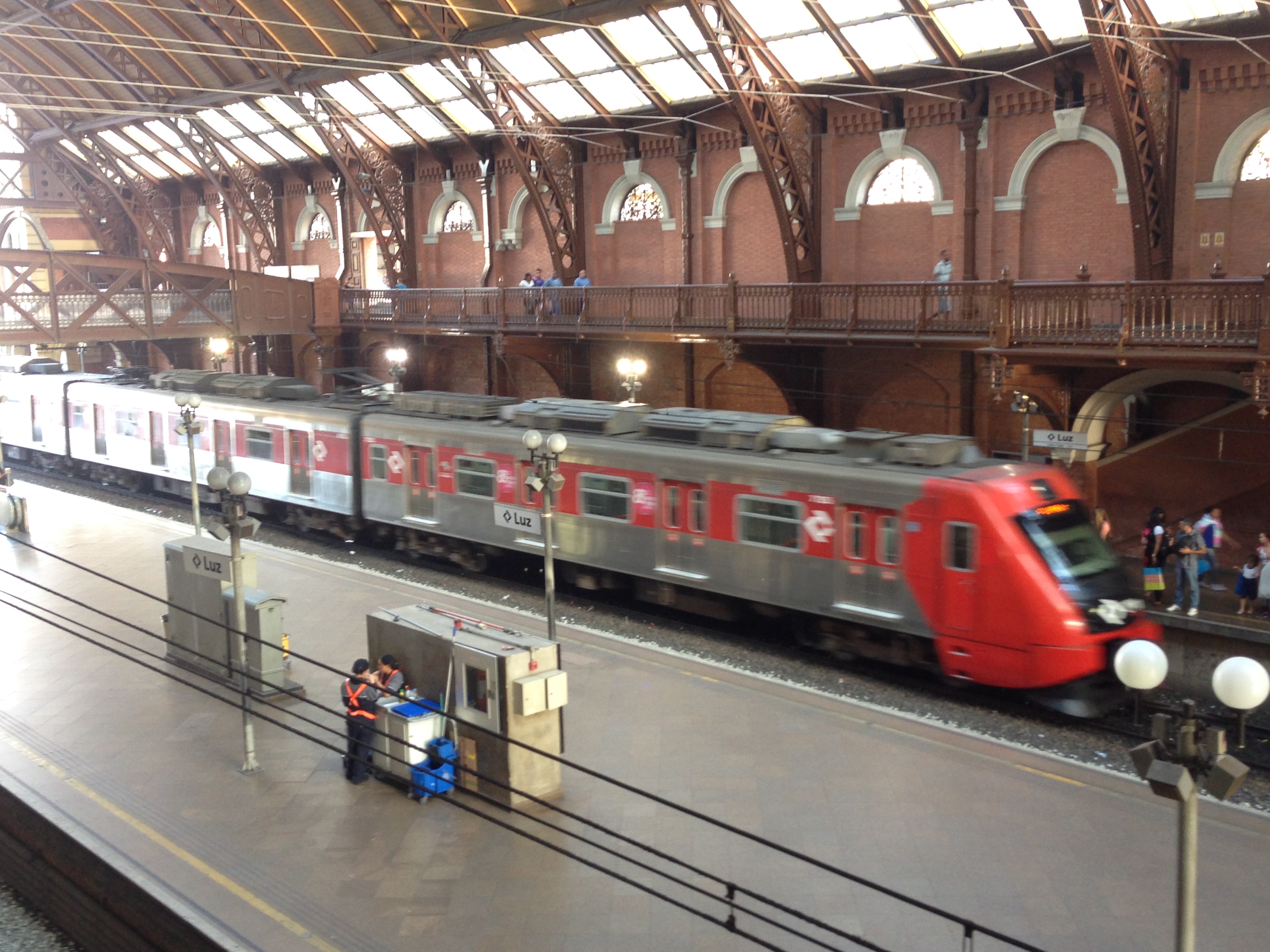
Trains, São Paulo
Trains, São Paulo.
The taste of America
The taste of America.

While I was gone: three posts!

I was in Brazil for the last two weeks; more on that later. For now, here are three things I wrote for City Observatory that were published in the interim:

1. Between highrises and single family homes: housing’s “missing middle”

This kind of mid-density, low-rise housing—including duplexes, triplexes, townhomes, and other low-density multi-family buildings—has been called the “missing middle”: American cities build lots of single-family homes, and (in a certain places) some larger apartment complexes, both in the form of sprawling suburban “apartment communities” and downtown highrises. What we don’t build are the kind of human-scaled, moderately-dense housing that has historically made up the bulk of America’s urban neighborhoods.

Screen Shot 2015-08-23 at 10.03.10 PM

2. The next road safety revolution

Even if you adjust for the fact that Americans drive more, the United States’ roads still stand out as some of the most dangerous: 20% worse than Germany, 40% worse than Denmark, and 71% worse than Norway.

As we’ve noted before, this is one of the cases where cities and urban living are the solution.  Because people drive less and drive more slowly in cities, traffic death rates are lower in more urbanized places.

Nor are dangerous streets an unchangeable part of national culture. In 1990, the US and UK had almost identical road fatality rates. But since then, the US has made much slower progress—and today, we suffer 71% more deaths for the same amount of driving. The difference is worth 14,000 American lives every year.

Screen Shot 2015-08-23 at 10.08.18 PM

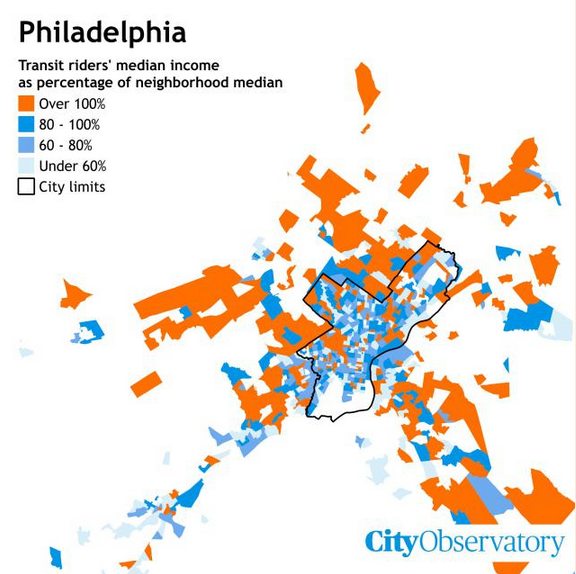
3. The suburbs: where the rich ride transit

So how do we explain this? Well, here’s where we get back to land use. In America, people with higher incomes tend to have certain kinds of jobs: in particular, white-collar office jobs in fields like insurance, law, finance, and so on. In many American cities, those jobs are heavily concentrated in the downtown core. In cities like Philadelphia, which has an extensive commuter rail network, or Seattle and Minneapolis-St. Paul, which have a pretty good network of regional express buses, that makes commuting from the suburbs quite convenient: You can walk from the downtown station to your office, avoiding both the frustrations of driving in rush hour traffic and the expense of downtown parking.

But the situation looks very different for lower-income people. Those jobs are disproportionately likely to be blue-collar manufacturing or service sector, which are much more scattered across the metropolitan area. If you live in the suburbs, the prospect of commuting to another suburb by transit is probably pretty bleak: in most regions, very few suburban jobs are walking distance from a rapid transit station, and local suburban buses are often unreliable and too slow to efficiently travel across the massive distances of American metropolitan areas.

Faced with unreliable, extremely slow commutes by transit, most of those blue-collar and service sector workers will just find a way to buy a car and drive—even if it eats into the money they have for other important expenses. And so you end up with a situation where a lot of wealthy people have an easy transit commute to their jobs, but lower-income people do not.

Screen Shot 2015-08-23 at 10.10.03 PM

Chiraq and stigma

This is a piece I’ve been wanting to write for a while. I’ve expressed discomfort with “Chiraq,” and the other stigmatizing ways we talk about places and people on the South and West Sides before—but I haven’t really put together a coherent argument explicitly citing the research that informs my feelings about the issue.

My hometown, Chicago, is having a fight over words: in particular, “Chiraq.” That’s a portmanteau of “Chicago” and “Iraq,” which is meant to analogize the city not to that country’s rich cultural heritage, or extreme weather, but to its war. The name seems to have come from a South Side rapper, but has since been popularized by headlines in decidedly non-South Side outlets, at least three different VICE mini-documentaries, and most recently an in-the-works Spike Lee movie.

Most cities might not have a nickname with such staying power, but they’re familiar with the concept. “Killadelphia”; “Murder Worth”; “Bullet Town”; even“Murder Kroger.” Last year, a website called “Judgmental Maps” made a name for itself by posting annotated maps of American cities; some of the entries for Atlanta, to take a city at random, included “Little Crackistan,” “Dangerous Mexicans,” and “Avoid.” The map for Washington, DC, labeled all of the Anacostia area simply “GUNS & AIDS.” Around the same time, an app called SketchFactorannounced that it could help you get where you were going while avoiding “sketchy” neighborhoods.

Judging by the debate in Chicago, many people don’t see a problem with these expressions of local reputation. In a widely-shared essay, one prominent writer declared that “Chiraq” was indicative of real problems, from violent crime to concentrated poverty, and “arguing over what to call” that “shameful reality” was simply a tool of distraction—putting up a Potemkin facade to avoid dealing with the real issues.

It’s certainly true that the problems “Chiraq”—and, for that matter, “Killadelphia” or “Bullet Town”—was meant to encapsulate are real. (Even the “Murder Kroger” really did witness a murder.) But the second part of the argument—that the name itself is harmless—is simply not true.

Over the last few years, issues of racial and economic segregation have seen a new burst of attention, covering historic issues like redlining and cutting-edge research on the effect of concentrated poverty on economic mobility. But one of the squishier sides of segregation has received much less coverage: stigma.

Stigma creates the very problems it supposedly reflects

In part, that’s understandable: it’s much harder to measure stigma than it is to measure segregation—or even, as it turns out, to measure intergenerational economic opportunity. But that doesn’t mean it’s not a real, and powerful, force. In fact, strong evidence suggests that stigma can help create the very disadvantages it supposedly reflects.

Read the rest of it here.